
BNZ Theatre – creating a world-class venue, guided by Function Analysis
Described by NZ Herald arts commentator Dionne Christian as “New Zealand’s most beautiful theatre,” the world-class facility is a massive economic and cultural catalyst for the Waikato region.
The old Hamilton Founders Theatre was closed for safety reasons in 2016; this project was developed for Waikato Regional Property Trust and key funding partners.
The multi-purpose performing arts centre, situated on the banks of the Waikato River at the old Victoria Street site, opened its doors to a sold-out gala performance in January 2026, marking the end of a seven-year briefing, design, procurement and construction journey.
The 8,700sqm development comprises a 1,300-seat spectacular auditorium capable of operating in modes including theatrical, orchestral and concert, supported by back-of-house facilities including change rooms, administration areas and advanced stage engineering systems.
The project also integrates the restored 1923 Hamilton Hotel façade and significant heritage elements, including original timber features and historic joinery.
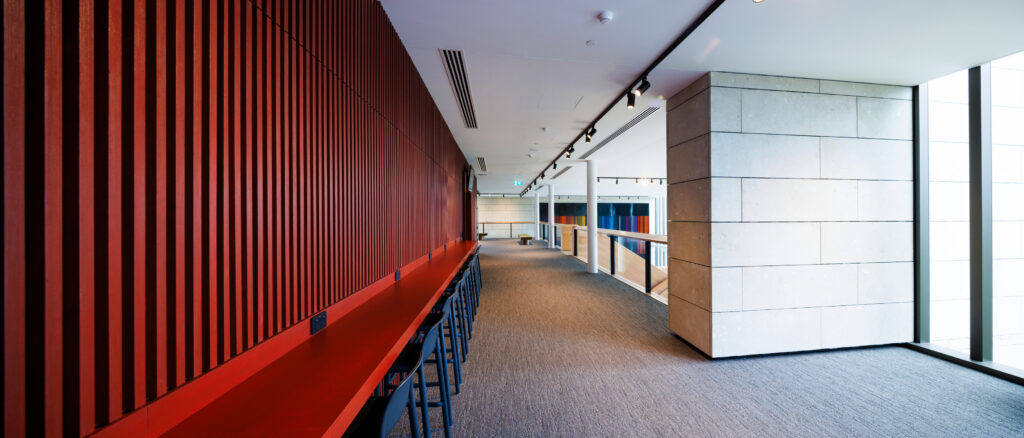
The wider precinct includes four commercial tenancies, two function spaces and a revitalised public realm, featuring a multi-level riverside foyer, outdoor ātea and the renewed Embassy Park.
The objective
The objective was to create a flexible, future-focused theatre integrating world-class amenity. Continuing the legacy of the beloved Founders Theatre, the venue was designed to support international touring acts while remaining accessible to regional performers, schools, and community groups.
Equally important was revitalising a prominent but underutilised CBD site, celebrating the historic significance of the site and reconnecting the city to the Waikato River.
Function Analysis
RDT Pacific brought an understanding of what is required for a successful community project.
Conscious of the multiple constituents, each advocating to optimise their part of the project, constrained by the need to raise funding from the Waikato region in a recessionary environment and aspiring to deliver excellence, developing a brief that optimises each of the drivers without compromising the others is a vital starting point.
Early in the project, RDT Pacific initiated a Value Enhancement process that included Function Analysis, facilitated through two workshops in September 2018 that set the objectives for the project.
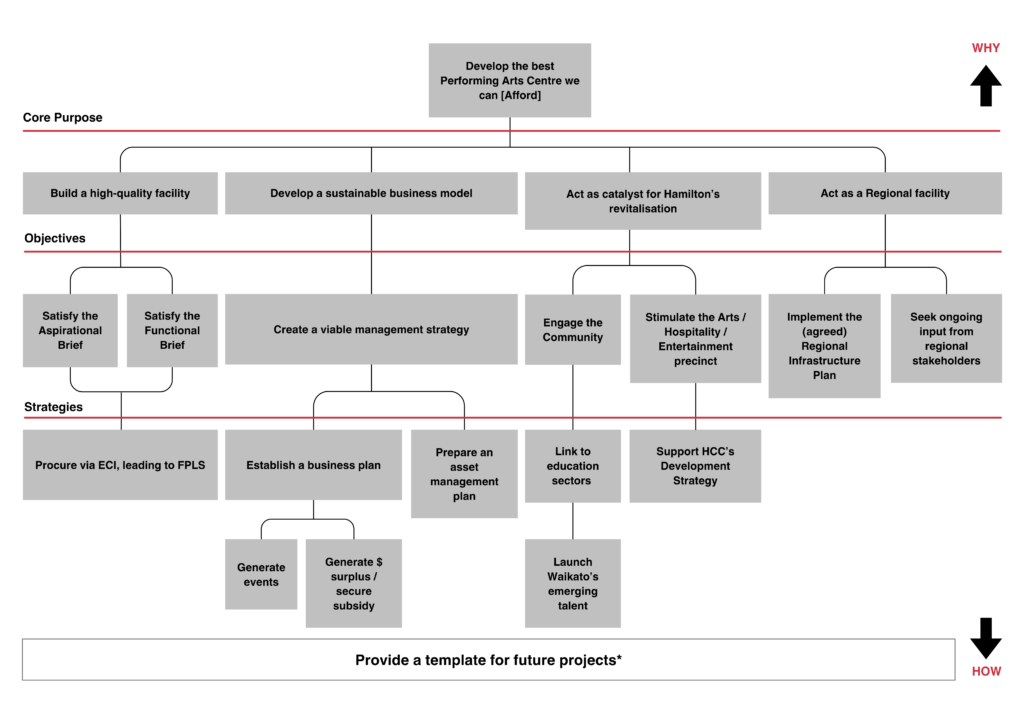 Figure 1 – Function diagram: linking core purpose to objectives and delivery strategies
* Included at the request of the Hamilton City Council (who participated in the workshop) so the approach and outputs can be reused as a template for future projects.
The process ensured that owners, funders, operators, consultants and contractors were clear on the project’s purpose, objectives and strategies (and why they mattered).
It assisted stakeholders to define intended outcomes and reduced the risk of late-stage design shifts, consequential delays and cost pressure as what was envisaged in the study was built within the project budget. It also helped strengthen the working relationship between the design team and stakeholders through clarity of objectives.
“A key factor in the success of this project was the project management role being underpinned by a thorough Function Analysis study involving all stakeholders. Stakeholders often assume shared understanding, but this process tests that hypothesis” – RDT Pacific Project Manager
In practice, the Function Analysis work focused on four simple steps:
- Confirm the full stakeholder map and ensure good representation in decision making.
- Separate function requirements from aspirational objectives and agree priorities.
- Translate agreed outcomes into a structured brief and decision criteria (the function diagram).
- Use the outputs as a live reference point as conditions change.
Risk clarity
Participants in the Value Enhancement workshops identified risk clarity as a desirable adjunct to Function Analysis.
So in a similar vein, with all stakeholders present and objectives fully identified, risk at each stage (planning, construction and operating) was quantified and used to inform the planning priorities employed:
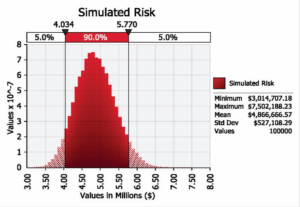
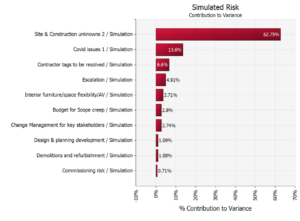
As a consequence, provisioning was appropriate and the project managers were enabled to better identify and manage potential points of failure.
This approach to risk also informed the choice of the contracting model adopted and the transfer of risk to the party thought best able to manage it.
The challenges
A central challenge was building community support for a new theatre (rather than refurbishing the former Founders Theatre, which could no longer meet modern needs), while also raising funding during the economic downturn after Covid.
On site, delivery was complex. The footprint was tight and in the heart of the city, and the team had to connect a new build with protected heritage elements while delivering specialist theatre requirements for acoustics, structure and stage systems.
Retaining the 1923 Hamilton Hotel façade was a major task. A steel retention structure was required to support the façade during demolition and reconstruction behind it, before it was tied back and restored.
At the same time, global shortages and shipping delays affected materials and equipment. Prices rose, and the project required careful coordination across specialist designers, consultants and subcontractors.
Delivered over a seven-year programme, the project required disciplined cost control, programme management and risk mitigation in a challenging market. The mixed funding model – balancing government, philanthropic and community investment – added further complexity and demanded transparency and accountability throughout delivery.
The outcome
12 months of demolition, a five-year construction programme, 536 companies involved in the project – the BNZ Theatre build story is one of community, local capability, and regional pride in delivering a world-class theatre for the Waikato.
BNZ Theatre opened in January 2026 as a flexible, multi-mode performing arts venue and civic destination for Kirikiriroa Hamilton and the wider Waikato region.
Operational settings include a long term venue management agreement with Live Nation, alongside community access measures such as discounted hire for eligible non-profit organisations, community bookings bundled with in-house equipment to reduce production costs, and a dedicated contribution to a community fund to subsidise local use from every commercial ticket sold.
The completion of the project saw the realisation of the objectives identified during the Function Analysis process and ultimately the project’s core purpose and confirms the benefit of this process on complex community projects.
BNZ Theatre’s quality has since been recognised industry-wide. At the Property Council New Zealand Property Industry Awards 2026, the venue received Excellence and Best in Category for Heritage & Adaptive Reuse, along with an Excellence award in Civic, Health & Arts. It was also named a winner in both the Heritage and Public Architecture categories at the Te Kāhui Whaihanga New Zealand Institute of Architects Waikato & Bay of Plenty Architecture Awards 2026, and took out the Civic category and the Premier Award at the inaugural New Zealand Interior Awards.
Equally rewarding has been the response from performers themselves. Following recent concerts, the New Zealand Symphony Orchestra Te Tira Pūoro o Aotearoa spoke highly of the venue’s sound and feel, with James Judd describing it as one of the best orchestral venues in New Zealand.
Fast facts
Client: Waikato Regional Property Trust
Location: 198 Victoria Street, Hamilton Central
Value: >$110m
Completion: 28 November 2025
Project Manager: RDT Pacific
Quantity Surveyor: Kingston Partners
Design Team: Jasmax; Charcoalblue
Building Contractor: Foster Construction
This case study has been written and supplied by RDT Pacific. Photos supplied by RDT Pacific, with image credit to BNZ Theatre / Live Nation New Zealand.